
Fatal Countdown – immoral List of Desires Screenshots









Fatal Countdown – immoral List of Desires review
Master survival mechanics, narrative choices, and gameplay strategies in this post-apocalyptic simulation
Fatal Countdown – immoral List of Desires is a survival simulation game developed by Secret Garden and published by Playmeow, released on April 9, 2024. This post-apocalyptic interactive experience combines resource management, narrative-driven gameplay, and psychological horror elements. Players navigate a collapsed city where law and order have vanished, managing limited resources while making morally complex decisions that shape their story’s outcome. With its blend of survival mechanics, character relationships, and branching narratives, the game offers a unique experience for players seeking challenging, story-rich gameplay. Understanding the game’s core systems, mechanics, and progression paths is essential for maximizing your experience and unlocking all available content.
Game Overview and Core Mechanics
Ever stared at a screen, utterly paralyzed by choice in a game? I have. In so many open-world titles, you’re given a thousand tools and told to survive, but it often feels shallow. Fatal Countdown – immoral List of Desires flips that script entirely. This isn’t about having unlimited freedom; it’s about making every single, agonizing choice count within a brutally limited framework. As a survival simulation game, it masterfully creates tension not from hordes of zombies, but from the quiet desperation of managing dwindling resources and fragile human connections in a collapsed world. Welcome to your first, and most important, lesson in survival.
What is Fatal Countdown – immoral List of Desires? 🤔
Imagine waking up to a world where the thin veneer of society has vanished overnight. A mysterious virus sweeps through, and the authorities simply… disappear. This is the haunting premise of Fatal Countdown – immoral List of Desires. You are not a hardened soldier or a destined hero. You’re an ordinary person, thrust into anarchy, with two critical dependents: Alice, your childhood friend, and Ada, your brother’s wife. Your sole mission is to keep them alive, sheltered, and sane as the city descends into chaos.
This post-apocalyptic game guide will be your companion through the bleak streets. The game belongs firmly in the survival and simulation genres, but with a distinct anime-inspired aesthetic that makes its darker themes even more poignant. It’s a narrative-driven experience where your management of concrete resources like food and materials is inextricably linked to the management of abstract ones like hope and mental stability. Every day is a delicate balancing act, and a single misstep can unravel everything.
The core loop is elegantly simple, yet deeply complex in its consequences. You are given three actions per day. That’s it. No grinding, no endless farming. You must choose between reinforcing your shelter, venturing out into the dangerous city to scavenge, or tending to the needs of your companions. This constraint is the heartbeat of the Fatal Countdown gameplay mechanics, forcing you into a state of constant strategic triage. Do you risk an outing for much-needed medicine, or stay safe and fortify the walls, hoping your food lasts? The weight of these decisions is the true soul of this branching narrative game.
Essential Gameplay Systems and Resource Management ⚙️
At its core, survival in Fatal Countdown is a relentless puzzle of scarcity. You can’t do everything, so you must learn to optimize your three daily actions to address the most pressing threats. Let’s break down the pillars you’ll be juggling:
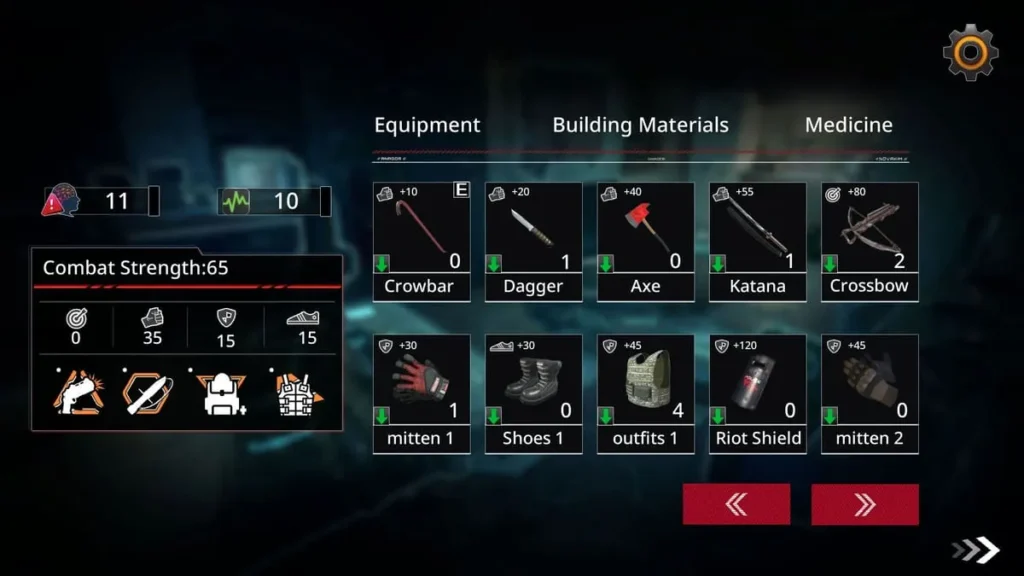
- Building Materials: Your shelter is your lifeline. Materials are used to repair and upgrade your defenses. Neglect this, and random events or intrusions can devastate your supplies and morale.
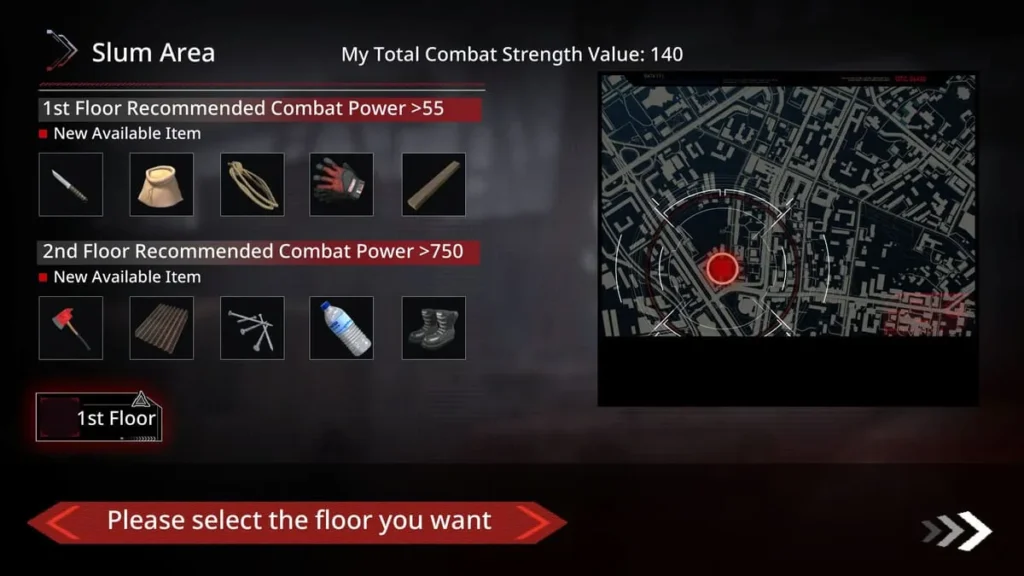
- Going Out: This is your high-risk, high-reward action. You’ll explore the city, encountering other survivors, finding precious items, and facing potential threats. What you find can be the difference between life and death.
- Insanity Tracking: A constant, ticking clock in the corner of your screen. Stressful events, seeing horrible things, or failing to protect your companions will cause it to rise.
- HP Management: Both you and your companions have Health Points. Injuries can occur from events or failed outings, and healing items are scarce commodities.
- Equipment Enhancement: Weapons and tools you find can be improved, making your “Going Out” actions slightly safer or more productive.
Think of your first week in-game. The initial rush is about gathering. You’ll use your actions to “Go Out,” scrounging for cans of food, bottles of water, and bundles of wood. But here’s where the resource management survival depth kicks in: you can’t just hoard. Alice might fall ill, requiring you to spend an action to care for her instead of foraging. A storm might hit, damaging your shelter and forcing you to use precious materials on repairs instead of upgrades. I remember one playthrough where I focused purely on stockpiling food, ignoring our mental state. We had a full pantry, but Ada’s Insanity spiked after a traumatic event, triggering a chain reaction of paranoia that doomed the run. Food means nothing in a broken mind.
The Fatal Countdown gameplay mechanics are interconnected like a spider web. A successful “Going Out” trip might net you a new wrench (Equipment), but you may also witness a disturbing scene (+Insanity). Using materials to build a better lock (Building) might prevent a burglary, saving your food (Resource) and keeping everyone’s sanity in check. It’s a brilliant system that makes every choice feel multifaceted and significant.
Pro Tip: Never dedicate all three actions to one type of task. Always diversify. A good early pattern is: 1) Go Out for resources, 2) Use some materials to Build/Repair, 3) Check on a companion’s status. Adaptability is your greatest skill.
Now, where can you experience this tense simulation? The game is accessible on a couple of key platforms, each with slight variations.
| Platform | Storefront / Method | Price | Notes |
|---|---|---|---|
| PC (Windows) | Steam | $10.99 | The most common and updated platform, with Steam community features and easy updates. |
| PC (Windows) | itch.io | $12.99 | Often supports developers more directly. Price may vary slightly. |
| Mobile | APK (Official Website) | Typically Free or Donation-based | Allows for on-the-go play, but ensure you download from the official source for security. |
Understanding the Sanity Mechanic and Game Endings 🧠➡️💀
If resources are the body of the game, then the Sanity mechanic is its tortured soul. This isn’t just a “fear meter”; it’s a core narrative driver and the primary determinant of your fate. In Fatal Countdown – immoral List of Desires, everyone has an Insanity stat—you, Alice, and Ada. This value creeps up in response to the horrors of the world: failing to find food, witnessing violence, being attacked, or even through certain narrative choices in this branching narrative game.
This is where the sanity mechanic gameplay truly shines. It’s not about a single “crazy” ending. It’s a spectrum of collapse. As a character’s Insanity increases, they’ll suffer penalties: reduced effectiveness on tasks, negative events triggered at home, or conflicts between companions. Let’s talk about endings—the game endings and choices are directly tied to this mental state.
The game features a “Mental Crash” value. Think of it as the point of no return for a character’s psyche. When a character’s Insanity hits 100%, they experience a Mental Crash. Which character crashes, and the context of your relationships and resources at that moment, dictates which ending you receive.
- Low Insanity Endings: If you manage resources expertly and keep everyone’s mental state relatively stable, you can achieve more hopeful conclusions. Perhaps you find a rumored safe zone, or a semblance of order returns. These endings require meticulous balance and a bit of luck.
- High Insanity Endings: This is where the “immoral List of Desires” part of the title often comes into play. A Mental Crash can lead to tragic, dark, and morally complex conclusions. Desperation can make people—including you—do terrible things for survival. One ending might involve a sacrifice born of twisted love. Another might see paranoia dissolve your group from within. I won’t spoil them, but they are powerful reminders of the game’s themes.
Your management of sanity mechanic gameplay is, therefore, the ultimate strategy. It’s more important than having a stockpile of beans. You might have to choose to use an action to “Talk” with a distressed companion, lowering their Insanity but sacrificing a chance to gather food. Is short-term hunger worth preventing long-term psychological collapse? The game forces you to answer that, again and again.
Mastering Fatal Countdown – immoral List of Desires isn’t about finding a single “win” button. It’s about understanding that survival is a holistic concept. You are managing a tiny, fragile ecosystem of bodies and minds. Your resource management survival tactics must always be filtered through the lens of their psychological impact. Every choice in this survival simulation game, from the seemingly mundane to the critically dangerous, weaves the thread of your unique story, leading you toward one of many stark, unforgettable finales. The true challenge isn’t just to survive the apocalypse, but to decide what kind of person—and what kind of family—emerges from it, if anyone emerges at all.
Fatal Countdown – immoral List of Desires delivers a compelling blend of survival mechanics, narrative depth, and strategic decision-making that appeals to players seeking meaningful interactive experiences. The game’s complex systems—from resource management and character relationships to the impactful sanity mechanic—create a cohesive gameplay experience where every choice matters. Whether you’re drawn to the post-apocalyptic setting, the psychological horror elements, or the branching narrative structure, understanding these core systems will enhance your journey through the collapsed city. The multiple endings and True Ending requirements encourage multiple playthroughs, ensuring long-term engagement with the game’s rich content. By mastering the daily action economy, optimizing your resource allocation, and carefully considering your moral choices, you’ll unlock the full potential of this unique survival simulation. Start your adventure today and discover how your decisions shape the fate of your companions and your own survival in this morally complex world.